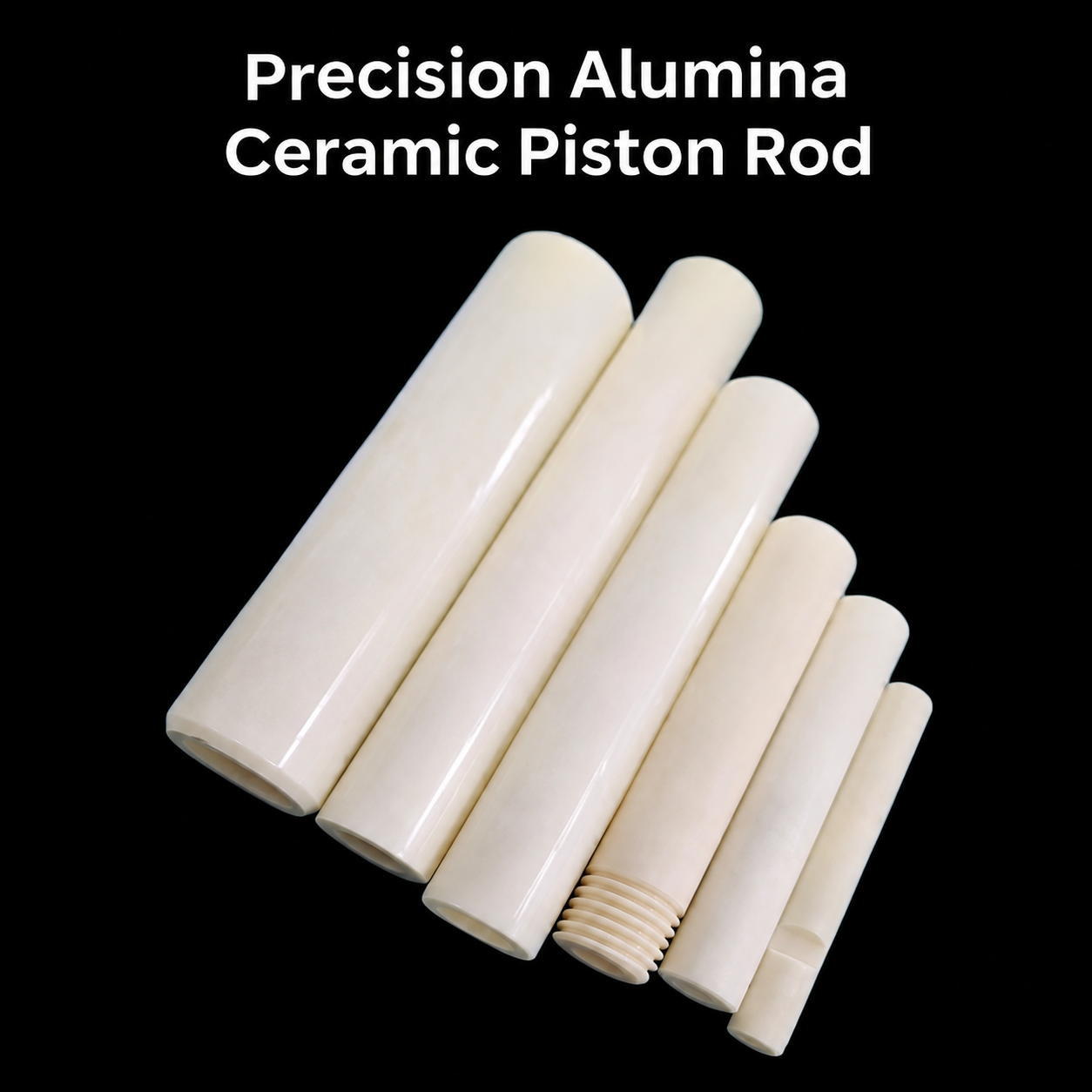
This ceramic piston rod is made from 95%–99.8% alumina ceramic for pump assemblies, dosing equipment, filling systems and precision machinery. Its hard working surface helps reduce wear in repeated sliding contact and can offer corrosion resistance in compatible fluids. Each rod is made to customer drawings, including the diameter, length, end features and surface finish needed for the assembly. Material grade is selected to suit the operating conditions.
Alumina grades from 95% to 99.8% Al₂O₃ are available. The right choice depends on the liquid being handled, operating temperature, mechanical loads and budget. A higher-purity grade is not necessarily the best option for every design.
We can also supply ceramic-to-metal assemblies with stainless steel adapters where the mounting design requires them. For more information, see our alumina ceramic materials.
See our ceramic pump components for other parts used in fluid-handling equipment.
The following figures are for reference. Material properties vary by grade and test method. Machining requirements are reviewed against the rod’s diameter, length and shape before production.
| Parameter | Reference Value | Notes |
|---|---|---|
| Material Purity | 95%–99.8% Al₂O₃ | Grade selected for the application. |
| Vickers Hardness | 18–22 GPa, subject to grade verification | The applicable value and test conditions must be confirmed from the material data. |
| Surface Finish (Ra) | ≤0.1 μm on specified working surfaces, subject to review | Applies to the surfaces identified on the drawing. |
| Diameter Tolerance | ±0.002 mm, subject to size and geometry review | Fit clearance and form tolerances are specified separately. |
| Straightness | ≤0.01 mm over 100 mm, subject to review | The measurement length and inspection conditions are agreed before production. |
| Compressive Strength | >2100 MPa, subject to grade verification | This is a material property, not a working pressure rating for the rod or pump. |
Alumina, zirconia and stainless steel suit different designs. Wear is one consideration, but impact, side loads and connection details also matter.
| Selection Factor | Alumina Ceramic | Zirconia Ceramic | Stainless Steel |
|---|---|---|---|
| Wear Resistance | Hard surface for many sliding and abrasive applications | Wear-resistant, with higher fracture toughness than typical alumina grades | Depends on the alloy, surface treatment and lubrication |
| Impact and Side Loads | Needs good alignment and protection from impact | An option when greater ceramic toughness is needed | Generally more tolerant of impact and deformation |
| Electrical Properties | Electrically insulating | Common structural grades are electrically insulating | Electrically conductive |
| Mounting and Connections | Mounting details should avoid concentrated stress | Connection geometry still needs careful review | More options for conventional threaded and welded connections |
For an alternative material, view our zirconia ceramic piston and plunger assemblies. Fluid compatibility should be checked at the actual concentration and operating temperature.
Please send your drawing and quantity, along with the working medium and temperature. Mark any critical tolerances, surface finishes and connection details so we can review them before quoting.
Yes. We can review a sample and confirm the dimensions with you. If the sample is worn, the original working dimensions and fit requirements need to be established before production.
Yes, depending on the design. We review the thread profile, ceramic wall thickness, connection method and loads to determine a suitable manufacturing approach.
No. Diameter tolerance applies to one part. Clearance depends on the dimensions of both mating parts, so it needs to be specified separately.
Not always. A piston rod usually transfers motion to a piston. A plunger moves through a sealing arrangement to displace liquid. We use the assembly drawing and intended function to confirm the correct part description.
Yes. Tell us which dimensions and surface characteristics you need recorded. We agree on the inspection scope and report requirements before production.
Keep the alumina ceramic piston rod aligned with the assembly. Avoid impact, excessive clamping force and side loading, and follow the mounting and clearance requirements in the equipment design.